

Wenwan Walnut Polishing Guide: How to Get the Perfect Red Patina
Introduction
In the world of Wenwan (Chinese traditional hand-played objects), the rich, ruby-like hue of a perfectly polished walnut isn't just about color — it's the crystallization of time, devotion, and craft. There's a saying among enthusiasts: "A red walnut speaks." It speaks of years of patience, the warmth of the palm, and the silent dialogue between human and nature. But not every walnut will achieve this coveted red sheen. It's said that three parts depend on nature, and seven parts on technique. This guide will walk you through the essentials of selecting, polishing, and maintaining Wenwan walnuts — from beginner to mastery.

Part 1: Selection is Everything — The Four Key Factors
A walnut’s potential to develop a rich, deep red patina depends largely on its outer skin.Look for:
-
Maturity: Walnuts harvested too early are thin-skinned, low in density, and prone to dullness. Mature walnuts have a rich brown hue, glossy texture, crisp knocking sound, and feel heavy in hand.
-
No Flaws: Avoid walnuts with dark patches ("yin skin"), uneven oil patterns, or wormholes, which disrupt oxidation and lead to uneven coloring.
-
Natural Processing: Wild walnuts naturally air-dried are superior to grafted or chemically treated ones. Over-trimmed walnuts lose their spiritual charm and become lifeless when polished.
2. Choose the Right Variety: Fast Red vs. Slow Jade
Different walnut varieties react differently to handling:
-
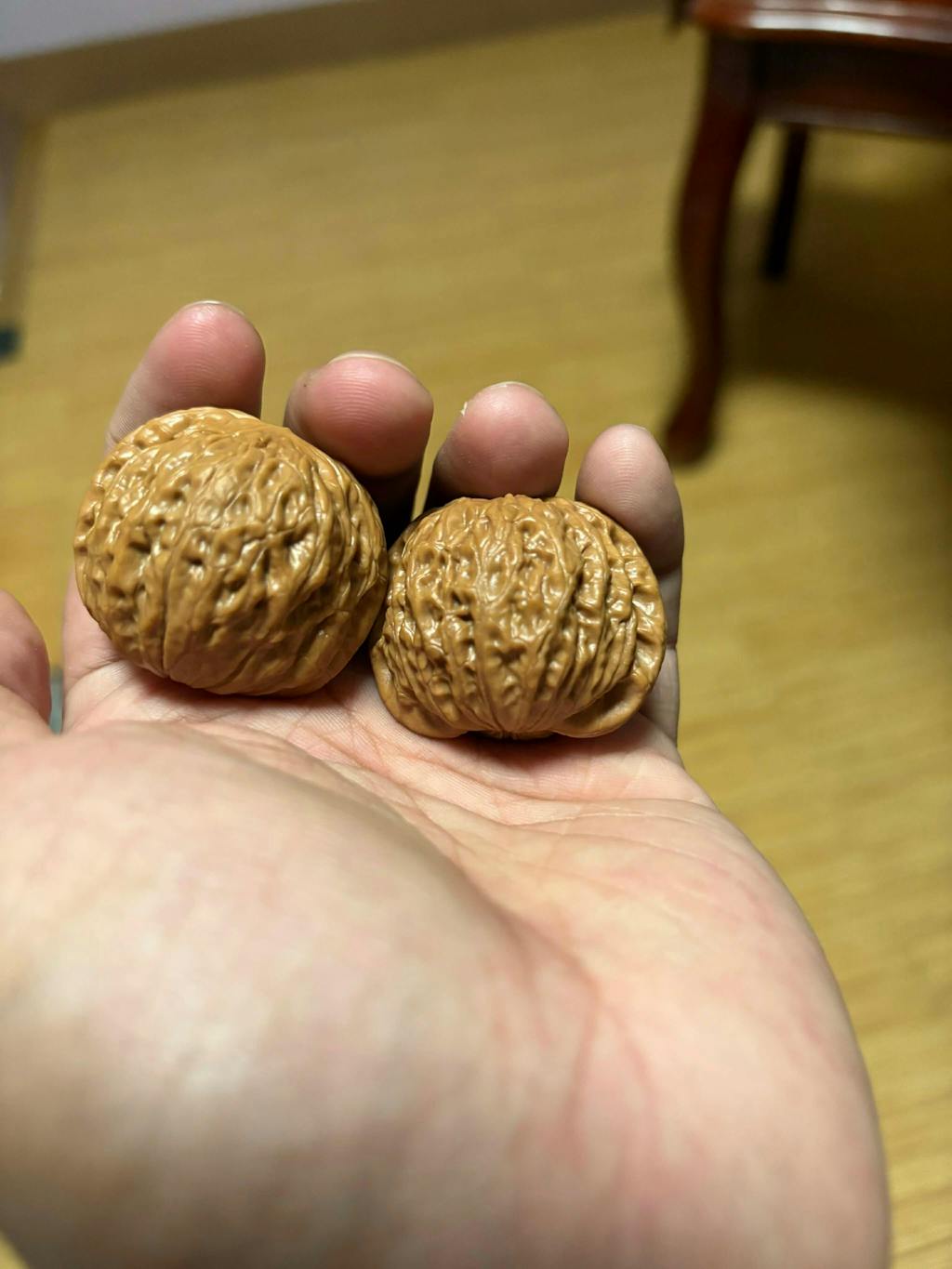
Quick to Redden: Varieties like Bai Shizi (White Lion), Mo Pan (Millstone), and Apple Orchard redden within 3–6 months due to shallow grain structure and high absorbency.
-
Slow but Worth It: Nanjing Stone or Da Cujin (Large Coarse Veins) are dense and slower to change but yield translucent, long-lasting patina.
-
Beginner Tips: Avoid overly deep-grained or loose-skinned walnuts. Deep grains collect dirt; loose skins darken easily.
3. Perfect Pairing: The Soul of Wenwan Walnuts
A good match directly affects your polishing experience and the walnut's collectible value:
- Six-Sided Precision: Size, grain, shape, and dimensions must align closely (within 0.5mm).
-
Watch for Fakes: Be cautious of resin or composite walnuts. Natural walnuts are never perfectly symmetrical.
4. Size and Grip: Comfort is Scientific
-
Ideal Size: For men, 40–45mm; for women, 35–40mm. Too large causes bumping; too small lacks tactile feedback.
-
Texture Choice: Health-conscious users may prefer knobby patterns (e.g. Qilin-style); collectors often go for rarer patterns like snake skin or water dragon.

Part 2: Mastering the Method — From Raw to Radiant
1. Preparation Phase: Cleaning & Pre-Polish
-
Gum Removal: Use a nano-brush or steel brush to remove white residues from grooves. Never soak in water. Use a toothpick for stubborn spots.
-
Glove Polish: Gently polish with cotton gloves for 3–5 days to remove dust and build a protective layer.
2. The 3:7 Rule — Polishing vs. Brushing
-
Polish Routine:
-
Single walnut kneading (stimulates pressure points)
-
Dual walnut rolling (even color development)
-
Rest phase (oxidation and patina hardening)
-
-
Brushing Routine:
-
Hard brush early on to clear buildup
-
Soft brush later to enhance shine
-
Deep grain areas need focused brushing (like brushing teeth)
-
"Brushing is walnut’s breathing; polishing is its nourishment."
3. Adapting to Sweat Levels: Custom Care
-
Sweaty Hands: Reddening happens faster. Limit polishing sessions to under 30 minutes to avoid oversaturation.
-
Dry Hands: Use a drop of olive oil sparingly to aid color development. Apply thinly and brush well.
4. Oxidation & Rest: The Silent Phase After every 3 days of polishing, rest the walnuts for 1 day in a sealed bag in a cool, dry place. True jade-like patina forms from the slow crystallization of cellulose and sweat — rushing it will only ruin the charm.

Part 3: Common Pitfalls — What to Avoid
-
Price Worship: A well-matched pair under $50 can outperform hyped varieties priced at hundreds.
-
Over-Oiling: Oil clogs wood pores, causes stickiness, or leads to dark patches.
-
Rough Handling: Forceful rubbing or hitting may speed up shine but damages natural texture.
-
Ignoring Climate: Dry regions need moisturizing care; humid areas need breathable storage.
-
Chasing Shortcuts: Machine polishing or chemical dyes ruin natural oxidation and cultural value.
"Polishing walnuts is about cultivating patience, not just shine."
Part 4: The Deeper Journey — Growing with Your Walnuts
Among Wenwan treasures, classic pieces like the lion head walnut slowly develop their rich red tone over 3–5 years. This patient change mirrors the inner growth of the player. The intersecting patterns of walnut and palm become a quiet record of time.
"Walnuts record years; your hands write the story."
When the glow of patina reflects persistence, Wenwan transcends mere objects — it becomes a life practice.

Final thoughts
Choosing the right walnuts is like finding a soulmate; polishing them is a meditation on consistency and care. Remember:
"The reddest walnut is never on the shelf — it lives in your palm."
If you're ready to begin, our Wenwan Walnut Pair offers an ideal starting point — carefully matched, beautifully finished, and waiting to write your story.
Share this guide with fellow enthusiasts and step into the timeless art of red patina.
FAQs
1. Can I polish Wenwan walnuts if they’ve already turned dark or uneven in color?
Yes, but results vary. Dark or uneven walnuts may improve with gentle brushing and rest, though they likely won’t achieve an even red patina again.
2. How often should I clean my walnuts once polishing has started?
Light brushing every few days is enough. Avoid water. If buildup occurs, gently remove it with a soft brush or cloth.
3. Is it okay to polish Wenwan walnuts during hot and humid seasons?
Yes, but avoid over-polishing. High humidity can cause stickiness or mildew. Store them in a breathable pouch and allow regular rest.
4. What should I do if one walnut in the pair develops faster than the other?
This is common. Rotate polishing between hands or switch positioning to help both walnuts develop more evenly over time.
5. Can children or elders safely polish Wenwan walnuts?
Yes. The process is calm and gentle, suitable for all ages. Just make sure the walnut size fits the hand comfortably.
6. What if I stop polishing for a while — will the walnuts lose their glow?
The shine may fade slightly, but regular handling and brushing can bring it back. Patina builds slowly and can be revived.
Related articles:
A Beginner’s Guide to Wenwan Walnuts: History, Meaning, and How to Choose a Pair
What Makes Wenwan Walnuts So Valuable to Collect and Play?
Wenwan Walnuts Explained: Origins, Benefits & Tips for First-Time Collectors