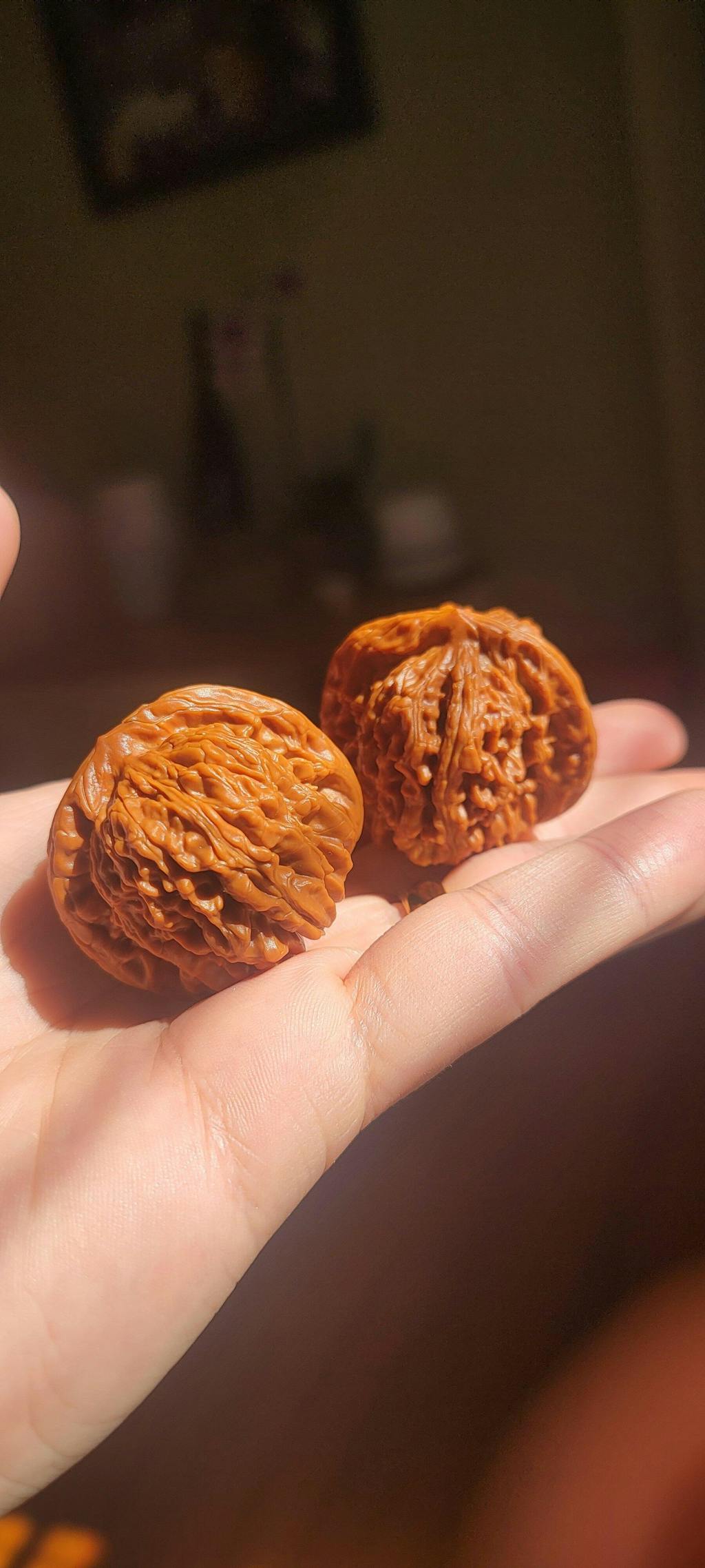


Top 3 Wenwan Walnut Mala Beads: Star and Moon Bodhi, Rudraksha, and Phoenix Eye Bodhi
Introduction
Wenwan walnut mala beads have captivated collectors for centuries. Among the many varieties, three iconic Bodhi seeds—Star and Moon Bodhi, Rudraksha, and Phoenix Eye Bodhi—stand out for their spiritual significance, durability, and unique aging process. This guide explores their origins, characteristics, and cultural importance in Buddhist practice.

What are Top 3 Wenwan Walnut Mala Beads?
The Bodhi tree under which the Buddha attained enlightenment belongs to the Ficus genus of the mulberry family (Moraceae). It bears syconium (fig-like) inflorescences and produces compound fruits similar to common figs, but it does not bear true fruits in the conventional sense.
Today, the term Bodhi seed is broadly used to refer to any plant seed used for making prayer beads. According to Buddhist scriptures, reciting the Buddha’s name using Bodhi seeds as counting tools brings immeasurable merit. As such, Bodhi seeds have become one of the most widely used ritual implements across all Buddhist traditions.
In general, exoteric (mainstream) Buddhism tends to favor Star and Moon Bodhi, while esoteric or Tantric Buddhism more commonly uses Phoenix Eye Bodhi. When practicing Vajrayana (the Vajra path), Rudraksha are also frequently employed.

Star and Moon Bodhi
1. Origin and Botanical Features
Star and Moon Bodhi is derived from the seed of the yellow vine (Daemonorops margaritae), a plant belonging to the palm family. It is one of the most common Bodhi seeds seen in both markets and on the streets. One of the most striking features of the yellow vine is its dense coverage of short, straight thorns on the leaf axis, petiole, and even the protective sheath around its inflorescence.
This plant grows widely in southeastern coastal China, as well as in South and Southeast Asia. Most of the Star and Moon Bodhi beads available on the market today are processed in Hainan, using raw materials sourced from Hainan, Guangxi, and Indonesia. Among collectors, Hainan seeds are often regarded as the best in quality. Freshly harvested yellow vine seeds are wrapped in a layer of fruit flesh, which must be removed to reveal the inner seed. Since the seeds vary in shape, color, and texture depending on the subspecies, they are given trade names like Jinchan Seed, Yuanbao Seed, or Mani Seed.
2. Meaning and Characteristics
After processing, these seeds display a central circular dent with numerous tiny black dots around it, creating a pattern reminiscent of stars encircling the moon—hence the name “Star and Moon Bodhi.” In the world of Bodhi malas, density is considered one of the most crucial attributes. A dense seed indicates healthy growth and full maturity, which naturally leads to better quality.
Among the various types, both Yuanbao and Jinchan seeds are praised for their excellent density and natural oil content, making them ideal for spiritual practice and everyday use. Yuanbao seeds, in particular, are favored for their snow-white color after processing and their high availability on the market.
3. Aging, Patina, and Spiritual Meaning
Newly processed Star and Moon Bodhi beads are bright white, but with consistent use and hand contact, natural skin oils gradually coat the surface. Combined with oxidation, this initiates a beautiful transformation—from white to yellow to red—eventually resulting in a charming wine-red hue.
Over time, the surface develops a rich, smooth patina that gives the bead a warm and glossy appearance. When viewed closely, intricate crack lines (kai pian) often appear, resembling delicate lightning streaks. This visual depth and aging process are what make Star and Moon Bodhi so captivating.
As practitioners often say:
“When you polish Bodhi beads, you’re also polishing your own mind.”
The true magic of Bodhi lies in this mutual transformation—between the bead and the person who cherishes it.

Rudraksha
1.Origin and Botanical Features
Rudraksha refers to the seed of Elaeocarpus sphaericus, a member of the Elaeocarpaceae family. While there are many natural variations, Rudraksha is generally divided into two main types: the Large Rudraksha from Nepal and the Small Rudraksha from Indonesia.
It’s worth clarifying a common misunderstanding: because Nepal is a major center for Buddhist culture and trade, many people mistakenly assume that Small Rudraksha is native to Nepal. In reality, Small Rudraksha is not grown in Nepal—it comes from Indonesia. On the other hand, Indonesia does produce some Large Rudraksha, but their quality is generally considered inferior to Nepalese Large Rudraksha beads.
When fresh, Rudraksha fruits have a striking bluish hue. After removing the outer pulp, the hard inner seed—the actual Rudraksha bead—is revealed.
2.Faces (Mukhi) and Natural Patterns
Rudraksha beads are categorized by the number of “mukhis” or natural vertical lines (faces) on the seed. The five-faced Rudraksha is the most common, while beads with fewer or more faces are increasingly rare and valuable. The rarest types include the one-faced (ek-mukhi) and twenty-one-faced Rudraksha, which can resemble a bird’s nest or a monk’s cap in shape—both are highly prized by collectors and spiritual practitioners.
Rudraksha beads also vary in surface texture, typically described as fine-grain, coarse-grain, meaty, or even burst-meat. Among collectors, meaty textures are often preferred, as they offer a more tactile, satisfying feel when held and stroked.
3.Aging, Patina, and Energetic Appeal
When properly stroked over time, Rudraksha develops a thick, warm patina, gradually turning into a semi-translucent amber glow. This transformation—brought about by the oils from one’s skin and the natural oxidation process—adds not just beauty but also personal energy to each bead. In this way, its evolution is similar to the patina seen on wenwan walnuts or well-used wooden malas.
Rudraksha is more than just a seed; it’s a spiritual companion. In many traditions, it is believed to enhance inner strength, aid meditation, and bring about clarity and calmness. And in the practice of wearing or stroking it daily, we find not only the aging of a sacred object, but the subtle refinement of the self.

Phoenix Eye Bodhi
1.A Sacred Seed in Tibetan Buddhism
Compared to Rudraksha and Star and Moon Bodhi, Phoenix Eye Bodhi is more commonly used in Vajrayana (Tibetan Buddhism) practices and is highly revered within Tibetan spiritual traditions. Native to Nepal, Phoenix Eye Bodhi is named for its “eye-like” sprouting mark in the center of each bead. These seeds come from a herbaceous plant found in the high-altitude regions of Nepal, and have long been favored by Tibetan practitioners for their symbolic depth and meditative quality.
2.Rare Variants and Spiritual Ranking
Like other types of bodhi seeds, Phoenix Eye Bodhi has several natural variants. Notable among them are the Dragon Eye Bodhi (with a triangular eye), the Kirin Eye Bodhi (with a square eye), and the rare Lucky Star Bodhi (with a five-pointed star shape). Among these, standard Phoenix Eye beads are the most common, while the Dragon Eye and Kirin Eye varieties are much rarer. There is a traditional saying among collectors: “From ten cartloads of Phoenix Eye, you may find one cartload of Dragon Eye; from ten cartloads of Dragon Eye, only one cartload may yield Kirin Eye.” This highlights how rare and precious the higher-variant Phoenix Eye beads are.
3.Traditional Processing and Modern Changes
Traditionally, freshly harvested Phoenix Eye Bodhi seeds were soaked in ghee (clarified butter) to remove their outer fruit pulp. The chemical interaction between the ghee, the seed pulp, and the hard seed coat produced beads with high density and strong oil content, making them more durable and resistant to cracking. Such ghee-treated Phoenix Eye beads also retained their luster for a long time. However, in recent years, due to rising ghee prices and increasing demand in the market, some producers have turned to water-soaking methods instead. While this makes production easier, it also results in beads with lower density and weaker durability compared to those treated with traditional ghee methods.

Final thoughts
Many seasoned collectors find that after years of exploring various Wenwan beads, they always return to the three most iconic Bodhi seeds: Star and Moon Bodhi, Rudraksha, and Phoenix Eye Bodhi. These classics offer a unique charm, unmatched beauty, and a deep spiritual presence.
Their lasting popularity comes from more than just tradition—they age beautifully, feel rewarding to handle, and help cultivate patience and mindfulness. For anyone starting their Wenwan journey, focusing on these three is both a reliable and meaningful choice.
FAQs
1. How do I properly care for and clean my Bodhi seed beads?
Use a soft cloth to gently wipe the beads. Avoid harsh chemicals or soaking in water. Regular hand contact helps develop a natural patina.
2. Can Wenwan beads be worn daily, or are they just for meditation?
They are suitable for both daily wear and meditation practice. Wearing them regularly aids in energy connection and patina formation.
3. Are all Bodhi seed beads natural, or are some dyed or treated?
Many beads are natural, but some may be dyed or polished for appearance. Always buy from reputable sellers to ensure authenticity.
4. How can I tell if my Rudraksha bead is genuine?
Authentic Rudraksha have distinct “mukhis” (faces), a natural groove pattern, and feel dense. Lab testing can confirm authenticity for high-value beads.
5. Does the number of beads in a mala have special significance?
Typically, malas have 108 beads, symbolizing spiritual completeness, but smaller malas exist for convenience or style preferences.
6. Can beginners use Phoenix Eye Bodhi or Rudraksha, or are they only for advanced practitioners?
All these beads are suitable for beginners and experienced users alike. The key is personal resonance and consistent practice.
7. Are Wenwan mala beads considered good gifts?
Yes, they are meaningful gifts symbolizing mindfulness, spiritual growth, and protection, appreciated by both practitioners and collectors.
Related articles:
A Beginner’s Guide to Wenwan Walnuts: History, Meaning, and How to Choose a Pair
Beginner’s Guide to Using and Caring for Wenwan Rudraksha Mala Beads
A Beginner’s Guide to Star and Moon Bodhi: Origin, Meaning, and How to Choose Your First Beads