

A Beginner’s Guide to Star and Moon Bodhi: Origin, Meaning, and How to Choose Your First Beads
Introduction
Discover the spiritual charm and tactile beauty of Star and Moon Bodhi beads. Whether you're drawn to their calming energy or captivated by their unique speckled patterns, this guide will help you understand their significance and how to start your journey with the right set.

What Are Star and Moon Bodhi?
Star and Moon Bodhi is a sacred seed often used in Buddhist prayer beads and wrist malas. It comes from a tropical vine known as Calamus rotang, native to central India, the Malay Archipelago, Papua New Guinea, and southern China.
Once polished, each seed reveals a distinctive pattern: a small central hole—representing the moon, which is the seed’s natural sprouting point—surrounded by countless tiny dark speckles. These speckles are actually vascular bundles inside the seed, densely scattered like stars across the sky.
This beautiful contrast gives the seed its name: Star and Moon Bodhi — a symbol of harmony, presence, and inner balance. The visual of "stars surrounding the moon" carries deep spiritual meaning in Buddhist culture, reminding us to stay centered no matter what surrounds us.

Main Market Varieties of Star and Moon Bodhi
In the current Chinese market, Star and Moon Bodhi beads are generally categorized into three types based on their origin: Hainan seeds, Guangxi seeds, and "Three-Nation" seeds (sourced from Southeast Asian countries such as Vietnam, Thailand, Cambodia, and Myanmar). Among these, the most highly regarded variety is the Maogan type (毛感料), which comes from Maogan Township in Baoting Li and Miao Autonomous County, Hainan Province, China.
Maogan Star and Moon Bodhi is prized for its high density, rich natural oil content, and limited availability. Although it takes a longer time to develop patina through handling, it forms a thick, glossy surface and boasts greater durability, making it ideal for both collection and long-term use. While high-quality seeds can occasionally be found in other regions, the overall consistency and average quality of Maogan seeds remain superior.
In contrast, Guangxi and Three-Nation seeds are more abundant and affordable, often used in beginner-level products. These beads typically feature dense star patterns and frequent "connected stars", but they tend to have lower density. They absorb oils and color more quickly, offering visible changes in a short time, which appeals to newcomers seeking faster results. However, due to their looser internal structure, these beads usually have a shorter lifespan compared to higher-density varieties.

Popular Types of Star and Moon Bodhi Beads
Among the various types of Star and Moon Bodhi beads, the most popular—based on public preference—can be ranked as follows:
Shunbai (Pure White) ➜ Chenzi (Aged Seeds) ➜ Cream Yellow ➜ Yinpi (Dark Skin) ➜ Zhusha Gong (Cinnabar Infused).
-
Shunbai, Cream Yellow, and Yinpi are all made directly by polishing the seeds of the rattan palm. They are categorized and priced according to their quality and appearance.
-
Chenzi beads are originally Shunbai seeds that have naturally oxidized and turned yellow over time.
-
Zhusha Gong carries a mysterious charm and is often considered more spiritually symbolic.
1. Pure White Star and Moon Bodhi
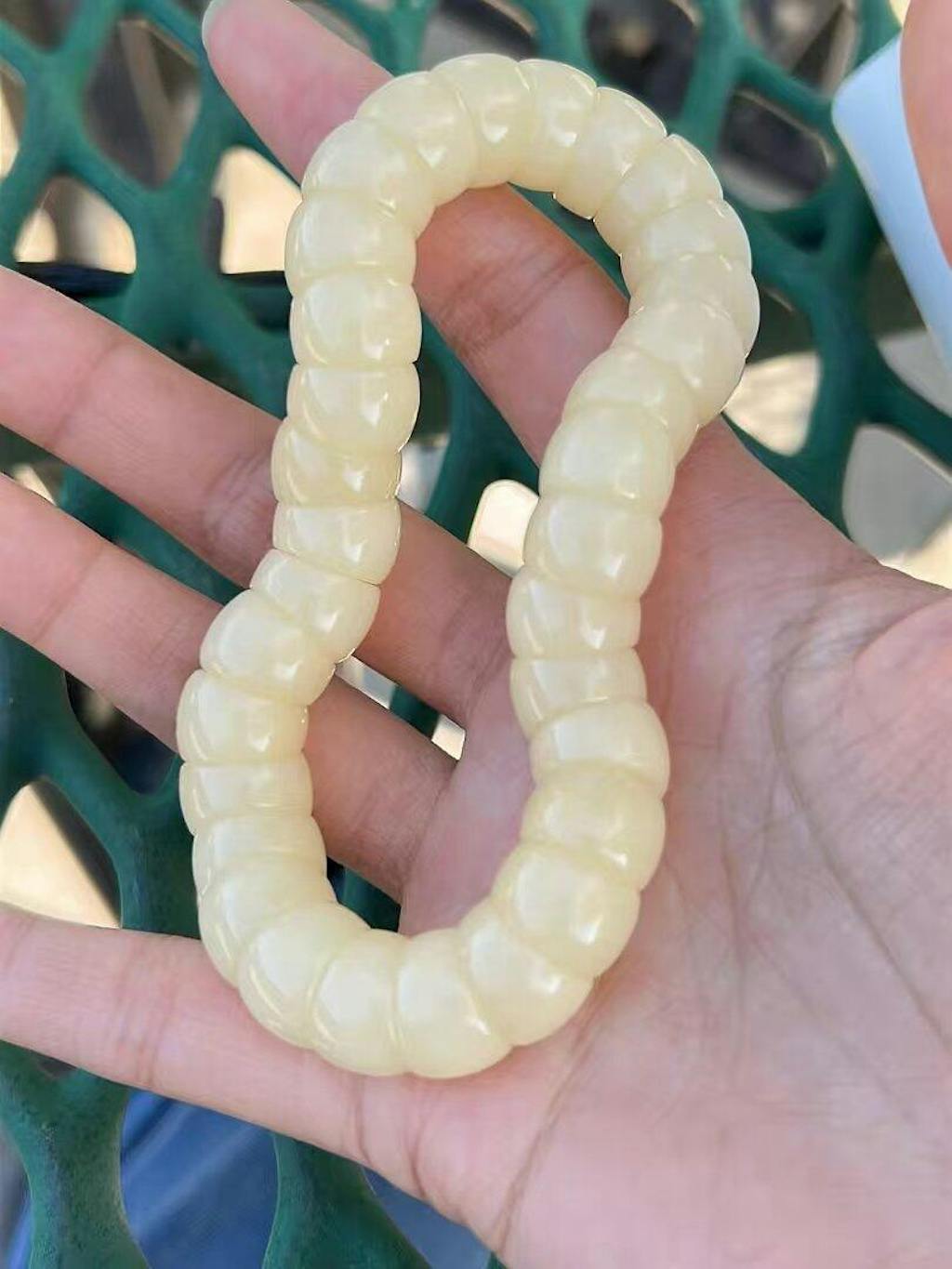
As the name suggests, a "pure white" strand of Star and Moon Bodhi beads features a consistently pale tone throughout—smooth and uniform like silk. Selecting a naturally white set of beads is no easy task; unless the beads have been chemically bleached, finding a full strand with evenly colored, natural seeds takes great effort and skill.
Even among natural white tones, there are subtle variations—milky white, ivory white, snow white, moonlight white, smoky white, silver white, and more. These delicate shades can differ dramatically under close inspection.
Why do people love “pure white” Star and Moon beads? Perhaps it's because they are among the easiest and fastest to develop a rich patina through regular handling. Watching them darken and gain a lustrous sheen in your own hands is a deeply satisfying experience—something only the owner can truly appreciate.
2.Creamy Yellow and Yin-Pi Bodhi Seeds: Nature’s Purest Treasures
When it comes to authenticity, these two types—Creamy Yellow and Yin-Pi—are among the purest natural Bodhi seeds available. Unlike many others that undergo various treatments during production, these are simply polished by hand, without any chemical or artificial enhancements.
Between the two, Yin-Pi is significantly rarer than Creamy Yellow. Because of this rarity, Yin-Pi malas can cost several times more. Unfortunately, this has led to dyed imitations flooding the market. And here’s the concern: not only are they overpriced, but those chemical dyes could potentially be harmful to your skin—can sellers truly guarantee safety?
We'll dive deeper into how to identify dyed Yin-Pi seeds in the "Counterfeit Guide" later. But here's what makes Creamy Yellow and Yin-Pi truly special: their natural oils remain untouched, which means they develop patina and gloss remarkably quickly. That’s the essence of playing with natural beads—the journey of transformation through pure material.
Over time, these two types gain a unique clarity and depth that other Bodhi seeds simply can’t match. The result is a luminous, porcelain-like finish that makes them not only rare but deeply cherished.
3. Aged Star and Moon Bodhi Beads
Aged seeds are like a fine wine—the longer they sit, the richer their character becomes. These beads are typically made from originally white star and moon bodhi seeds that have undergone natural oxidation over time, developing a warm yellow hue.
As the saying goes, “to each their own.” Some prefer the pristine whiteness of fresh seeds, which is why many are vacuum-packed to prevent oxidation. Others, however, are drawn to the mellow, aged color that time alone can produce—saving them the effort of waiting through the initial "cultivation" stage.
It’s a bit like choosing between building your own toy car from scratch and buying a ready-made one—both bring joy, just in different ways. Aged Star and Moon Bodhi beads come with a gentle yellow tone right out of the box and develop a patina more quickly with regular handling. One of their biggest advantages is that the final color tends to be more even and harmonious than that of newer white beads, which can darken unevenly over time.
4.Cinnabar-Infused Beads: Myth and Craftsmanship
Among collectors, there's a special type of bead known for its deep reddish tint. Some say the color comes from monks who used cinnabar powder while chanting, allowing the red pigment to seep in over time. Others claim it's the dye from their robes, slowly absorbed through years of spiritual practice. These stories are beautiful, but perhaps a bit too mystical.
The more widely accepted explanation today is a blend of traditional techniques: a mix of herbal dyeing and smoke treatment that gives the beads their signature aged look and warm tone.
There’s no single “best” type—each variation has its own charm. What matters most is finding a high-quality piece that resonates with you.

What Makes a High-Quality Star and Moon Bodhi Bead
In traditional Chinese culture, there are old sayings like “You can't carve rotten wood” and “Diligence makes up for lack of talent.” These expressions reflect a timeless truth: both natural quality and human effort play vital roles in determining the value of something.
When it comes to Star and Moon Bodhi beads, this idea applies perfectly. A truly good mala depends not only on the intrinsic quality of the seeds but also on the skillful craftsmanship that brings out their potential.
How to Identify the Quality of Star and Moon Bodhi Beads?
Star and Moon Bodhi beads are beloved for their spiritual meaning and natural beauty. When choosing a high-quality bracelet or mala, two key aspects deserve close attention: density and appearance. Let’s explore how to evaluate both.
1. Density: The Foundation of Durability
The density of Star and Moon Bodhi beads plays a crucial role in their durability, feel, and potential to develop a beautiful patina over time.
How to Judge Density
-
Weight in Hand: Heavier beads of the same size usually indicate higher density.
-
Sound When Tapped: High-density beads produce a clear, crisp sound when lightly tapped together.
-
Hardness Test: Quality beads are less prone to scratching and will not dent easily under moderate pressure.
Why It Matters
Dense beads are more resistant to cracking, especially after long-term wear or environmental exposure. They also absorb natural oils from your skin more effectively, enhancing the aging process known as "包浆" (patina formation).
2. Appearance: The Art of Visual Harmony
While density affects durability, appearance defines the beauty and aesthetic value of your beads. Collectors and wearers alike value the following visual features:
🎨 Key Appearance Qualities
-
Even Color Tone
A consistent hue across all beads brings elegance and balance. -
Centered “Moon Hole”
The iconic crescent-shaped pore (“moon”) should sit near the center of each bead.Off-center holes reduce visual appeal, though they don't affect function.
-
Minimal Star Clustering
Star pores should be evenly scattered.Avoid beads with clustered or overlapping star dots.
-
Balanced Shape and Symmetry
Whether round, barrel, or apple-shaped, a good bead should have smooth lines and proportional dimensions.Symmetry is a sign of careful craftsmanship.
🌿 A Note on Natural Imperfection
Remember: these beads are made from natural seeds, not synthetic materials.
Absolute perfection doesn't exist—and shouldn't. What matters is overall visual harmony, not flawlessness. Each bead is unique, and that individuality is part of its spiritual charm.
How to Identify the Level of Craftsmanship of Star and Moon Bodhi?
When it comes to evaluating a well-made Star and Moon Bodhi bracelet, craftsmanship plays a vital role. Below are the essential post-processing factors to consider:
1. Bead Size and Shape Consistency
All Star and Moon beads are polished from natural seeds, and their symmetry and size uniformity reflect the skill of the artisan.
-
Poorly trained manufacturers may produce misshapen beads (crooked or uneven) due to:
-
Improper machine speed control
-
Using worn-out or damaged tools
-
Inaccurate hand positioning during polishing
-
-
A skilled craftsman will ensure that beads are round, smooth, and consistent in size.
2. Is It a "Properly Aligned Bead" (Zhengyue)?
A “Zhengyue” bead refers to one where the moon-shaped eye (the circular mark) is well-centered on the surface of the bead.
-
The key to achieving Zhengyue lies in careful alignment during polishing;
-
High-quality raw seeds only need to be correctly positioned to naturally result in Zhengyue;
-
However, don’t be too fixated on this detail — a few slightly off-centered beads in a premium set are acceptable, as handcrafting can’t be 100% precise.
3. The Trumpet Hole: Neatness and Purpose
The trumpet-shaped hole, originally used to hide imperfections like chipping during drilling, has unexpectedly become a popular decorative feature, especially on barrel-shaped beads .
-
A well-polished trumpet hole can enhance the overall visual appeal;
-
On round beads or those with smaller cross-sections, however, it may thin the edges, making them fragile;
-
Crafting a clean trumpet hole requires:
-
Precise tool rotation speed — too fast or too slow can cause chipping;
-
Controlled tool temperature — excessive heat can burn the bead, causing yellowing around the hole;
-
-
The presence and quality of trumpet holes reveal the manufacturer's level of craftsmanship;
-
Importantly, only beads with high material density can withstand the carving of a trumpet hole without crumbling. Low-density seeds may develop porous, star-like hole damage.
Analogy: Having a trumpet hole is like removing a "veil" — it reveals whether the material and workmanship underneath are truly good.
4. Polishing Method: Wet Polish vs. Dry Polish
There are two common polishing methods in processing Star and Moon beads:
-
Wet Polishing:
-
Faster and more efficient;
-
However, it can damage the structure, leading to hollow star eyes and weaker beads that are prone to cracking;
-
-
Dry Polishing:
-
Slower and more labor-intensive;
-
Produces stronger beads with intact star eyes;
-
May leave slight tool marks or minor chipping, which is acceptable for quality durability.
-
👉 For longevity and aesthetics, dry-polished beads are highly recommended, even if they cost slightly more.
5. High Gloss Polishing
For beginners or casual wearers, high gloss polishing offers convenience:
-
The beads are polished to a mirror-like smooth finish;
-
No need to use rough cloth or special tools for initial polishing;
-
After a short period of hand rubbing, the surface develops a natural patina, ready for daily wear.

Common Fakes and How to Spot Genuine Bodhi Seeds
As the popularity of Bodhi seed malas grows, so does the presence of fakes on the market. Some counterfeits are easy to spot, while others are crafted to fool even semi-experienced collectors. Here are two common types of fakes and how to recognize them:
1. Plastic Beads Masquerading as Bodhi Seeds
At first glance, these beads may look flawless—uniform color, perfectly spaced "stars" (the black specks), and symmetrical "moons" (the central holes). But that perfection is exactly the red flag. These beads are often made from plastic molds.
-
What gives them away?
-
They’re too perfect—every bead looks identical.
-
They’re extremely lightweight.
-
They have no natural grain or texture.
-
When tapped together, they produce a dull, artificial sound.
-
These are often sold as cheap fashion accessories, suitable only for decorative use (e.g., sweater chains), not for traditional use or collecting.
2. Artificially Aged, Dyed, or “Cooked” Seeds
Some sellers target impatient buyers who want the rich, aged look of Bodhi beads without waiting for natural wear. To meet this demand, shady vendors artificially "age" fresh seeds using:
-
Boiling: Fresh beads are deep-fried and then shocked in cold water to induce surface cracking.
-
Tea Stewing: Soaked for hours in black or green tea to simulate natural patina.
-
Pigment Dyeing: Artificial dyes are used to mimic the tones of cream, aged yellow, or cinnabar red.
These methods often use inferior seeds—low density, poor texture, and full of defects—which are otherwise unsellable.
How to Identify Fakes
Here are three practical ways to tell real aged Bodhi beads from their fake counterparts:
1. Surface Texture
-
Genuine aged beads develop a smooth, waxy surface over time, often with a rich luster.
-
Fakes may have visible machine marks or feel rough to the touch, despite their colored appearance.
2. Star Pattern Condition
-
Real stars (vascular bundles) remain intact even after years of use.
-
In dyed or boiled fakes, the internal material often dissolves during the process, leaving the star patterns hollow or faded.
-
You can test this by boiling a questionable bead in clean water—within minutes, the water may turn reddish, revealing dye leakage.
3. Overall Color and Energy
-
While both fake and real aged beads may show red or yellow hues, the real ones exhibit a depth, glow, and clarity that fakes lack.
-
Counterfeit beads tend to look dull, flat, or too uniform—what’s missing is that “spiritual charm” or natural luster that true aged seeds gain over time.

How to Play with Star and Moon Bodhi Beads
Star and Moon Bodhi beads (a type of sacred seed bead) transform beautifully with time and care. The process of conditioning and playing with them is essential to bring out their natural luster, color, and character. This transformation happens in three major stages:
Stage 1: Glazing (Initial Polishing)
This is the very beginning of your beads' transformation journey. It's where the natural surface of the beads starts to develop a soft shine — known as glazing or forming a porcelain-like layer. While some high-polished beads come pre-glazed, most will require some initial polishing at home.
Steps to Begin Glazing:
-
Inspect and Disassemble:
Once you’ve confirmed the beads are in good condition, remove them from the string. This allows you to polish each bead evenly, ensuring a consistent look over time. -
Prepare Materials:
-
A bath mitt or exfoliating towel (use the rougher side).
-
A small amount of mung beans and rice (not too much — just enough to provide a soft abrasive).
-
-
Wrap and Rub:
Place the loose beads along with the mung beans and rice into the bath mitt, then tie it securely so nothing falls out.
Gently rub the pouch in your hands for 10–20 minutes per day. After 1–2 weeks of this process, your beads should start developing a light glaze.
⚠️ If your beads are already high-polished (machine-glazed), you can skip this stage.
Stage 2: Color Change and Patina Development
Once your beads have developed an initial glaze, it's time to begin direct hand contact — the real magic begins here.
How to Continue:
-
Re-string the 108 best-matched beads from your set (most sets come with 114 beads — 108 + 6 spares).
-
Start rubbing the beads by hand daily and wear them often.
-
This stage typically takes 3 to 9 months, depending on personal wear frequency, skin type, and climate.
Over time, you may notice slight color variation. Feel free to re-string the beads and group similar tones together. Focus on rubbing the lighter ones more to balance the tone.
Stage 3: Deep Shine and Crack Patterns (Aging Naturally)
After about 1 to 3 years, your beads will begin to develop a rich patina and may form natural surface cracks known as "crackle glaze" or kaipian — a beautiful sign of maturity.
Tips for Long-Term Maintenance:
-
No need to handle the beads too frequently at this point — let them rest and "breathe" between sessions.
-
Store them properly:
-
Avoid direct sunlight and strong wind.
-
Protect them from high humidity or water exposure.
-

Final Thoughts
A true Star and Moon Bodhi bracelet carries not just beauty, but spirit. Whether you’re a seasoned collector or new to the journey, the right beads can grow with you—deepening in meaning over time. Explore our latest handcrafted arrivals at BUDDHA3BODHI and find your perfect piece today.
FAQs
1. Can I wear my Star and Moon Bodhi bracelet every day?
Yes, daily wear is encouraged. The natural oils from your skin help the beads develop a smooth polish and richer color over time. Just avoid water and chemical exposure.
2. Do Star and Moon Bodhi beads change color over time?
Yes, high-quality beads darken gradually with use, forming a glossy patina. This aging process is a sign of natural material and regular handling.
3. Are all beads supposed to be the same color or pattern?
No, variations in color, star density, and moon marks are normal. Slight differences prove that the beads are natural and not artificially modified.
4. How many beads should a wrist mala have?
Wrist malas often come in 18 or 21 beads, while full malas have 108 beads. The choice depends on your practice or style preference.
5. Do I need to do anything special to “activate” the beads?
Not necessarily. Some people like to bless or dedicate their mala through meditation or mantra chanting, but this is a personal choice and not required for effectiveness.
Related articles:
A Guide to Star and Moon Bodhi Bracelet: Must-have for Beginners
Types and Identification of Bodhi Seed Mala Bracelets